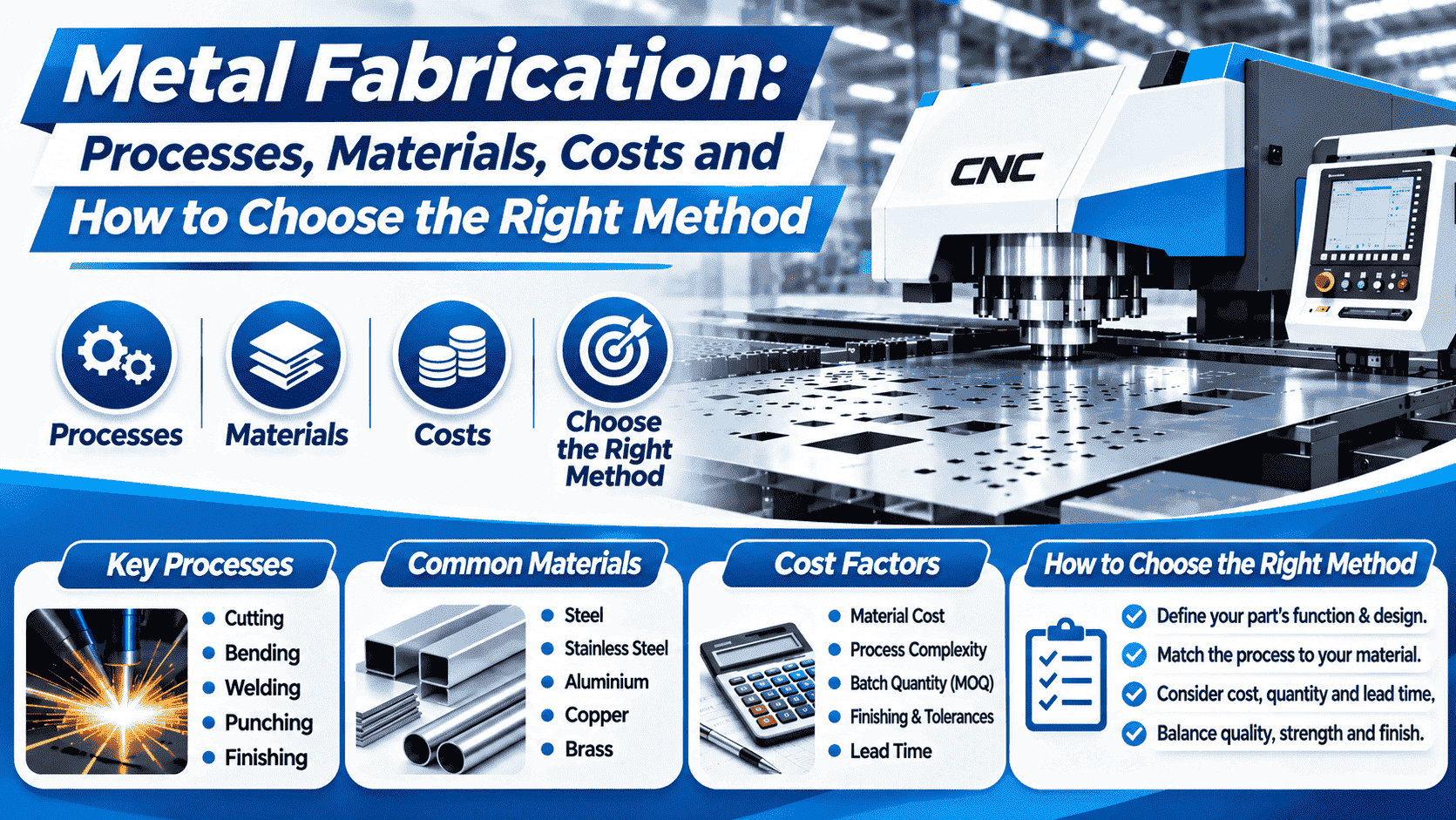
Metal fabrication turns raw sheet, plate, tube and bar into finished parts through cutting, forming, joining and finishing. Construction, energy, transport, electronics and food equipment all depend on it. This guide explains each stage, compares the main methods, and shows you how to plan a workflow that saves time and money.
Every fabrication shop starts with the right equipment. Choosing from a full range of metal fabrication machinery early helps you avoid bottlenecks later, because each machine sets the speed, accuracy and cost of the next step.
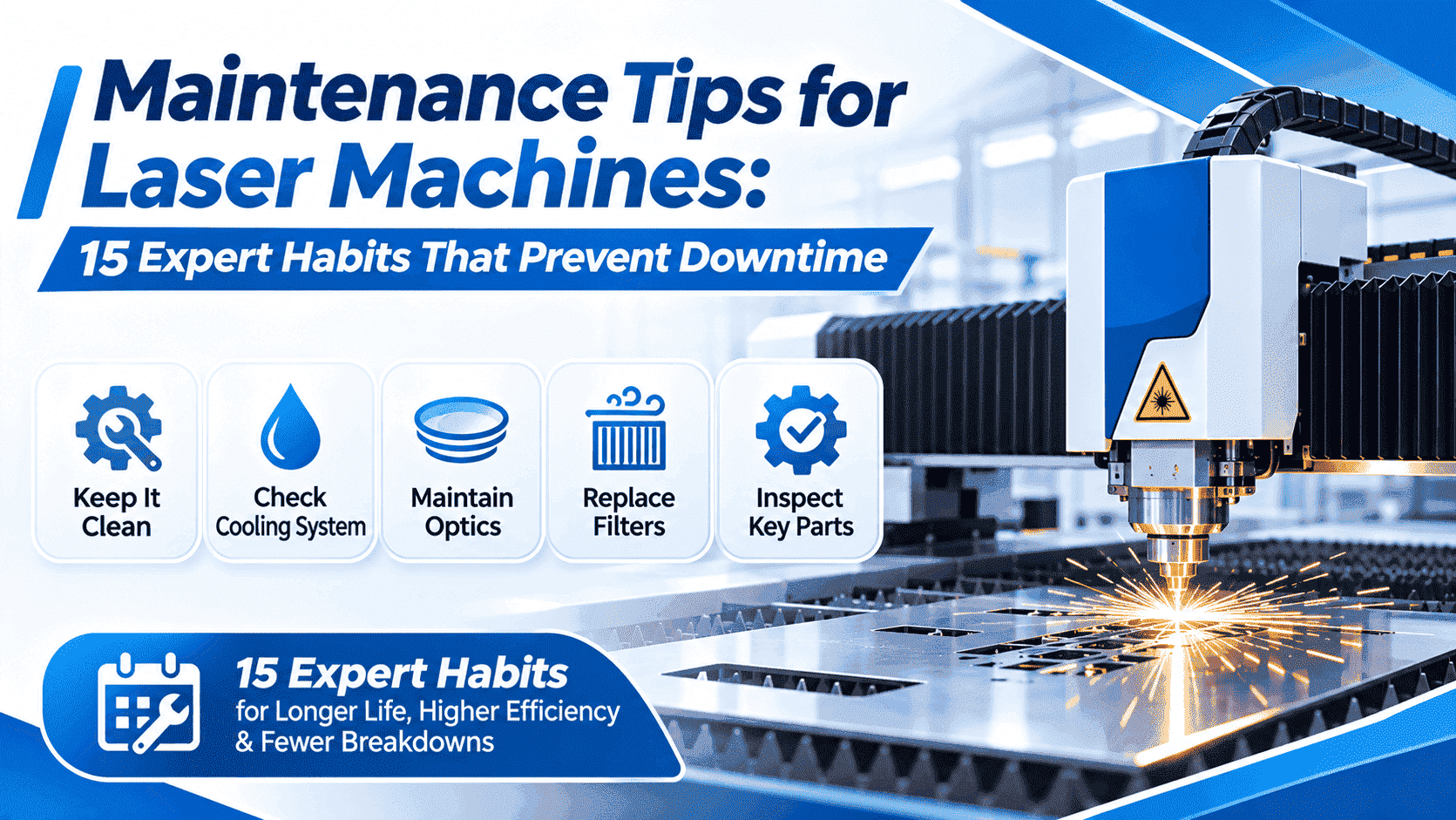
Cutting comes first in most jobs. A fiber laser cutting machine slices sheet metal quickly, leaves clean edges and nests parts tightly to reduce scrap.
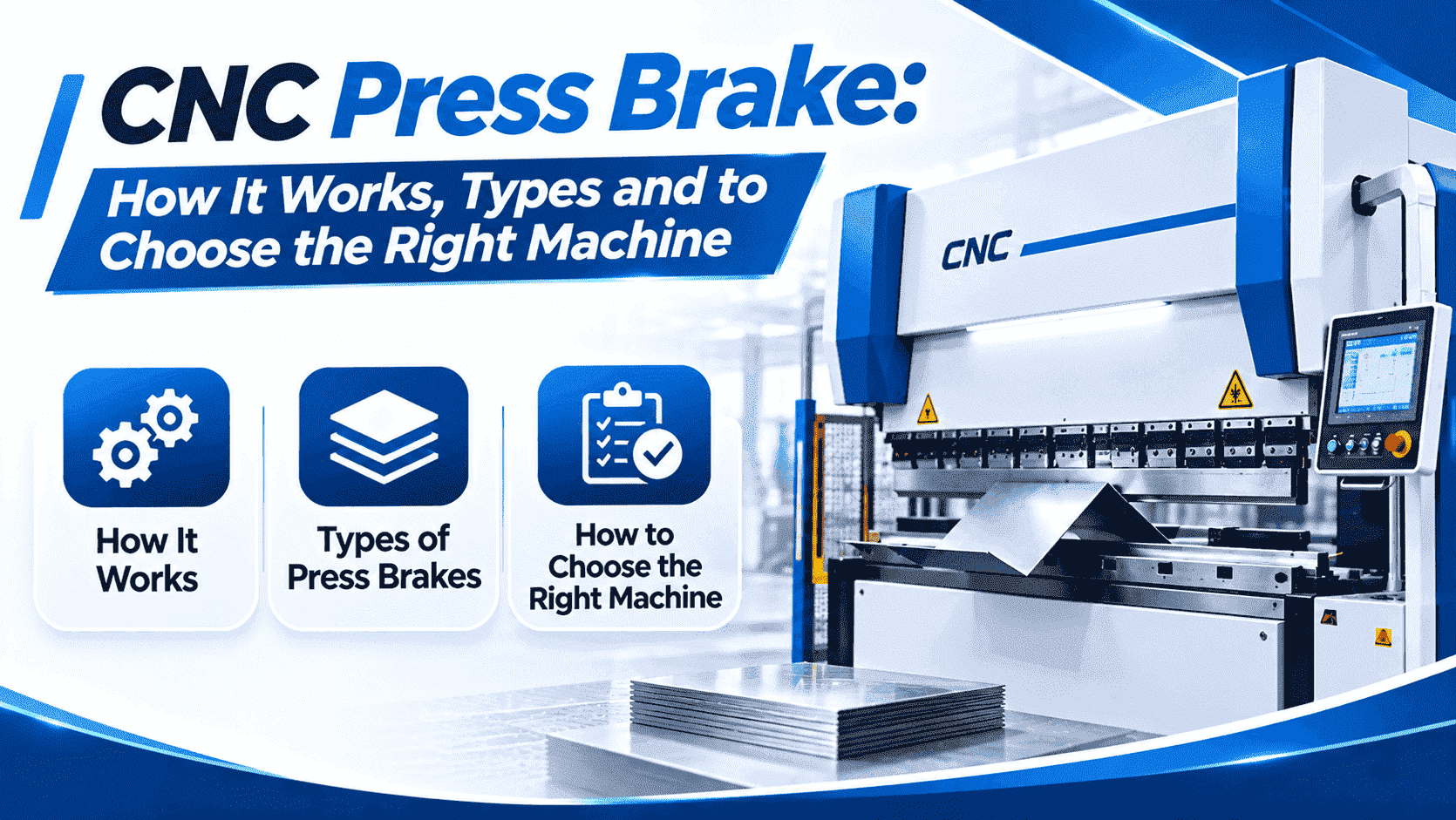
Forming comes next. A CNC press brake bends flat blanks into brackets, enclosures, frames and panels with repeatable angles.
Straight cuts on large sheets often start at the shear. Reliable hydraulic shearing machines square up plate quickly and keep the cutting stage cost-effective.
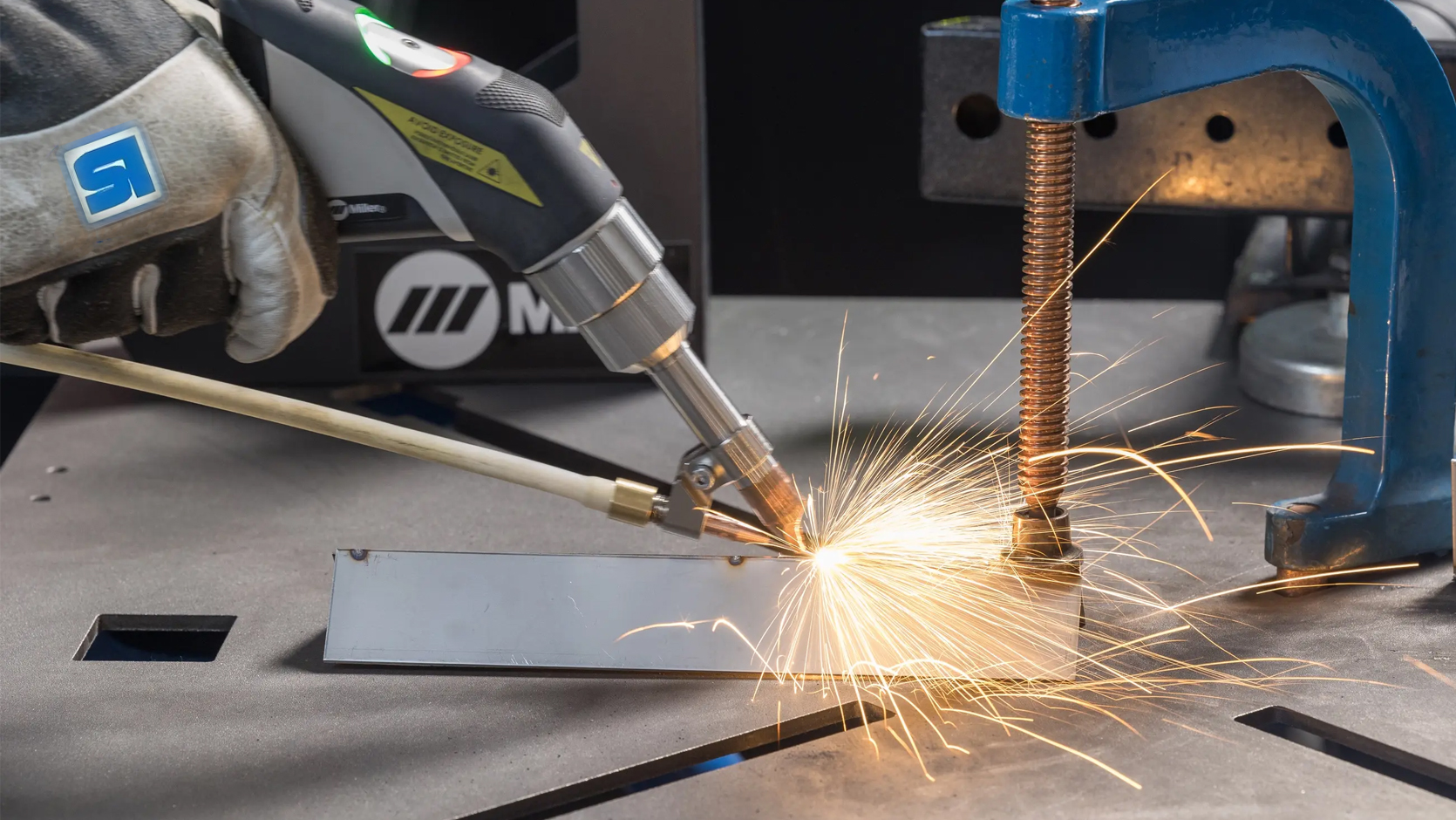
Finally, joining holds everything together. A handheld laser welding machine produces narrow, clean welds with less heat distortion than many traditional methods.
Key Takeaways
- Metal fabrication has four core stages: cutting, forming, joining and finishing.
- Laser cutting, press brake bending and welding handle most sheet metal work.
- Material choice, thickness and tolerance drive cost more than any other factor.
- Good design for manufacturability (DFM) cuts cost before production starts.
- Quality checks at every stage prevent expensive rework.
What Is Metal Fabrication?
Metal fabrication is the manufacturing of metal structures and parts by cutting, bending and assembling raw metal. Unlike casting, which pours molten metal into a mold, fabrication shapes solid metal with machines and skilled operators.
People often use “sheet metal fabrication” and “metal fabrication” as synonyms. Sheet metal fabrication focuses on thin flat material, usually under 6 mm. Metal fabrication is the wider term. It also covers plate, structural steel, tube and pipe work.
The Main Stages of the Metal Fabrication Process
Every project follows a similar path, even when the parts look very different.
| Stage | What Happens | Typical Equipment |
|---|---|---|
| 1. Design and engineering | Engineers create CAD drawings, check manufacturability and set tolerances | CAD/CAM software |
| 2. Cutting | Operators cut blanks from sheet, plate or tube | Fiber laser, plasma, shear, waterjet |
| 3. Forming | Machines bend, roll or press blanks into shape | CNC press brake, roller, punch press |
| 4. Joining | Welders and fitters connect parts permanently or temporarily | MIG, TIG, laser welder, rivets, fasteners |
| 5. Finishing | Technicians clean, coat and protect the surface | Grinder, powder coating line, plating |
| 6. Inspection and assembly | Inspectors verify dimensions, then assemble the product | Calipers, CMM, gauges |
Cutting: The First Cut Sets the Quality
Cutting defines how accurately every later step will fit. Shops choose a method based on material, thickness, volume and edge quality.
| Cutting Method | Best For | Typical Thickness Range* | Edge Quality | Main Trade-Off |
|---|---|---|---|---|
| Fiber laser | Sheet and thin-to-medium plate, complex shapes | Thin sheet up to about 25 mm in common carbon steel setups | Very clean, minimal burr | Higher machine investment |
| Plasma | Thick conductive plate | Medium to thick plate | Good, wider kerf | Rougher edge than laser |
| Waterjet | Heat-sensitive or non-metal materials | Very wide range | Smooth, no heat zone | Slow and costly per part |
| Mechanical shearing | Straight cuts in sheet and plate | Thin to medium plate | Clean straight edge | Cannot cut curves |
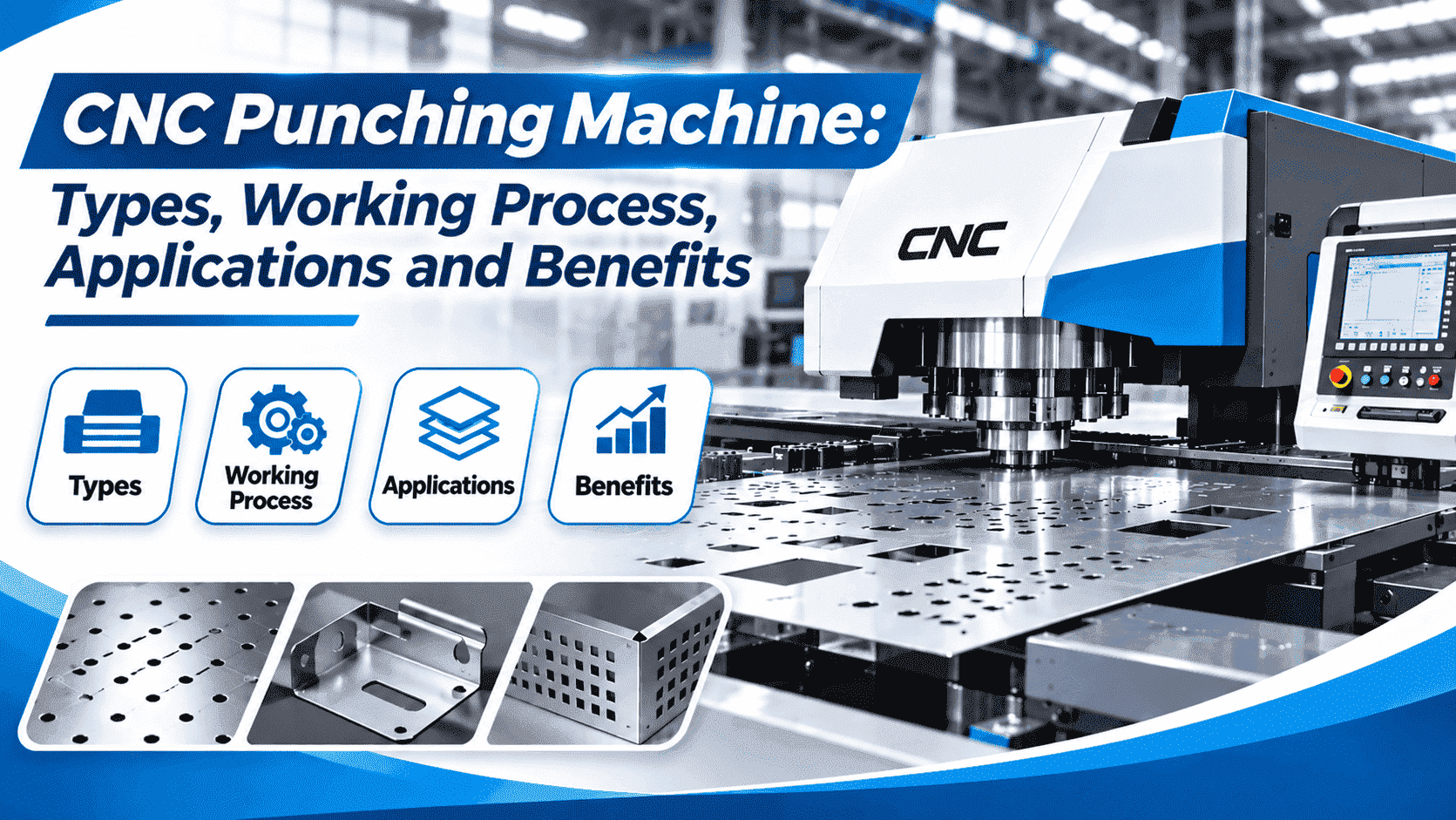
| CNC punching | Repeated holes and standard shapes | Thin sheet | Good | Tooling limits shape variety |
*Capacity depends on machine power, material and gas. Always confirm with your equipment supplier.
Fiber laser cutting leads the market for sheet work because it combines speed, accuracy and low operating cost. Nesting software arranges parts to use as much of the sheet as possible. That step alone often saves a meaningful share of material.
Forming and Bending: Turning Flat Blanks into Parts
Forming gives flat blanks their three-dimensional shape. Press brake bending dominates sheet metal work, although rolling, stamping and deep drawing also play a role.
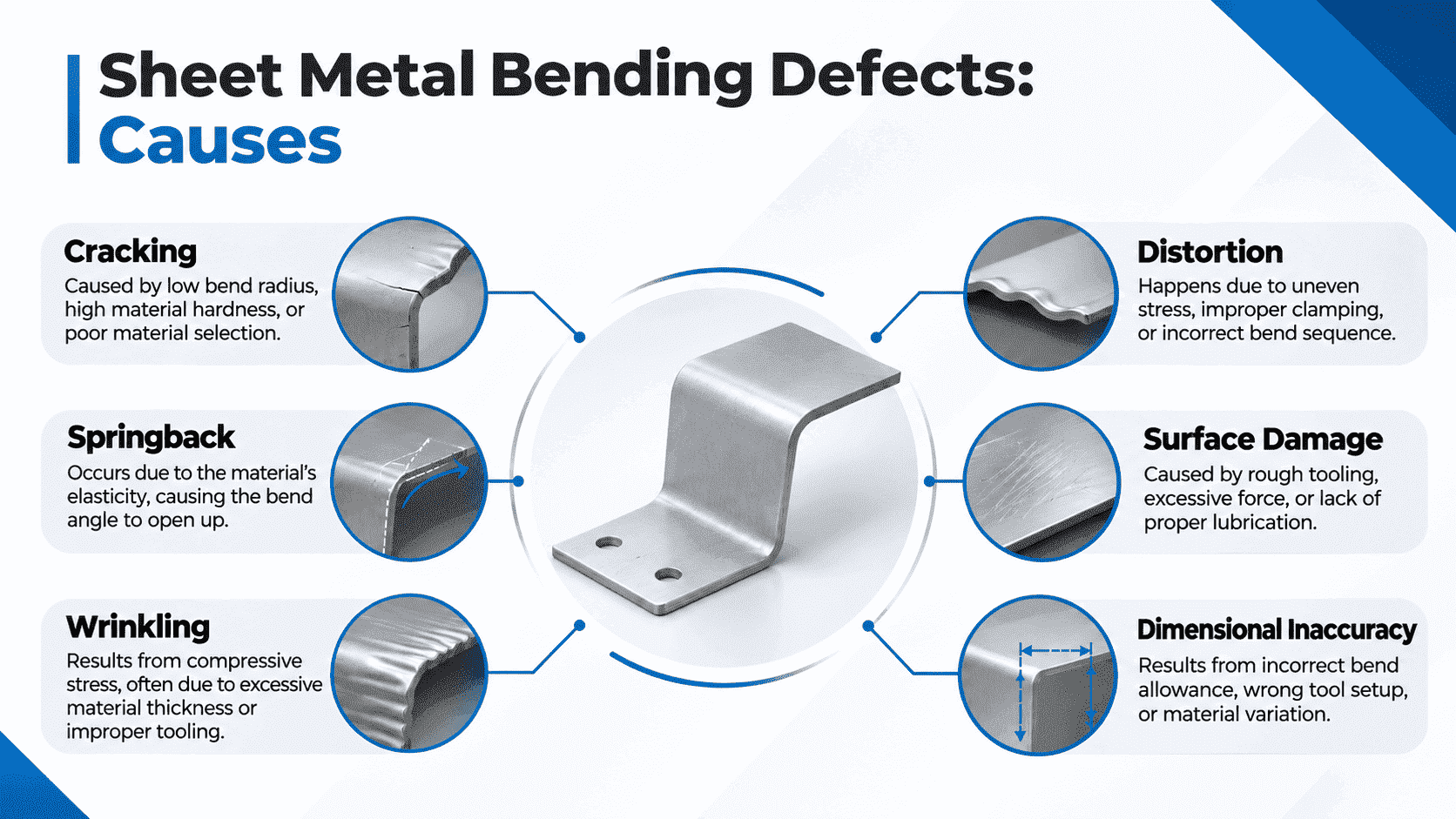
A press brake clamps the sheet between a punch and a die, then applies force to create a precise bend. Operators must account for several variables:
- Material thickness and tensile strength: Harder, thicker metal needs more force.
- V-die opening: A wider opening lowers the required force but increases the minimum flange length.
- Bend radius: Tight radii on hard materials can crack the outer surface.
- Springback: The metal partly returns toward its original shape, so operators overbend slightly to compensate.
Modern CNC controllers store these settings and calculate the bend sequence automatically. As a result, a shop can repeat the same part months later with consistent results.
Joining: Welding, Fastening and Assembly
Joining turns individual pieces into a finished assembly. Shops pick a method based on strength, appearance and production speed.
| Joining Method | Strength | Appearance | Best Use |
|---|---|---|---|
| MIG welding | High | Moderate, needs cleanup | Structural frames, thick steel |
| TIG welding | High | Excellent | Stainless steel, aluminum, visible seams |
| Laser welding | High | Very clean | Thin sheet, enclosures, high-volume work |
| Spot welding | Medium | Hidden joints | Automotive and appliance panels |
| Riveting and bolting | Medium | Visible fasteners | Serviceable or mixed-material assemblies |
Laser welding has grown quickly because it needs less filler, creates narrow seams and reduces distortion. Operators also learn it faster than many manual arc processes, which helps shops that struggle to hire skilled welders.
Finishing: Protecting and Improving the Surface
Finishing protects parts from corrosion, improves appearance and sometimes adds function. Common options include:
- Deburring and grinding: These steps remove sharp edges and weld spatter.
- Powder coating: A baked polymer layer gives a durable, colorful finish.
- Galvanizing and plating: Zinc or nickel layers resist rust.
- Anodizing: This process hardens and colors aluminum.
- Passivation and polishing: These treatments restore stainless steel’s corrosion resistance and shine.
Common Materials in Metal Fabrication
Material choice affects strength, weight, cost and every process downstream.
| Material | Key Strengths | Fabrication Notes |
|---|---|---|
| Carbon (mild) steel | Low cost, strong, easy to weld | Needs coating to resist rust |
| Stainless steel | Corrosion resistance, hygienic | Work-hardens, needs higher bending force |
| Aluminum | Lightweight, good conductivity | Reflective and soft, so welding needs skill |
| Galvanized steel | Built-in zinc protection | Coating can produce fumes when welded |
| Copper and brass | Excellent conductivity, attractive | Reflective, so fiber lasers need proper settings |
Where Industries Use Metal Fabrication
| Industry | Typical Fabricated Products |
|---|---|
| Construction | Structural beams, stairs, railings, facade panels |
| Energy | Solar mounts, wind tower parts, switchgear cabinets |
| Transportation | Chassis parts, brackets, trailer frames |
| Electronics | Server racks, enclosures, heat sinks |
| Food and medical | Stainless tables, tanks, hospital equipment |
| Agriculture | Machine frames, hoppers, implement parts |
What Drives the Cost of Metal Fabrication?
Many buyers focus on the price per part. However, several hidden factors shape the final quote.
| Cost Driver | Why It Matters | How to Reduce It |
|---|---|---|
| Material type and thickness | Raw metal often forms the largest share of cost | Use standard sheet sizes and the thinnest safe gauge |
| Part complexity | More cuts, bends and welds add machine time | Simplify shapes and reduce bend counts |
| Tolerances | Tight tolerances slow production and raise inspection effort | Specify tight limits only where function demands it |
| Order quantity | Setup cost spreads across more parts in larger runs | Batch similar parts into one order |
| Finishing | Coating and plating add steps and lead time | Choose the simplest finish that meets the need |
| Lead time | Rush orders disrupt scheduling | Plan ahead and share forecasts |
Design for Manufacturability: The Cheapest Improvement You Can Make
Smart design saves more money than any negotiation. Follow these practical rules:
- Keep bend radii consistent. One punch and die set then covers many bends.
- Respect minimum flange length. Short flanges slip in the die and bend inaccurately.
- Place holes away from bend lines. Holes near a bend distort during forming.
- Add bend relief cuts. Small notches prevent tearing at corners.
- Use standard thicknesses and hole sizes. Standard tooling avoids special orders.
- Group parts that share a material. Nesting several parts on one sheet cuts waste.
Quality Control and Tolerances
Quality control protects both the shop and the customer. Inspectors check parts after cutting, after forming and before shipment.
| Process | Typical Achievable Tolerance* |
|---|---|
| Fiber laser cutting | About ±0.1 to ±0.2 mm |
| CNC press brake bending | About ±0.5° to ±1° on angle |
| Hole position (laser or punch) | About ±0.1 mm |
| Welded assembly | Depends on fixtures and weld length |
*These figures are typical for well-maintained machines. Actual results depend on material, part size and operator skill.
Shops also keep material certificates, record inspection results and follow standards such as ISO 9001 to prove consistency.
Trends Shaping Modern Metal Fabrication
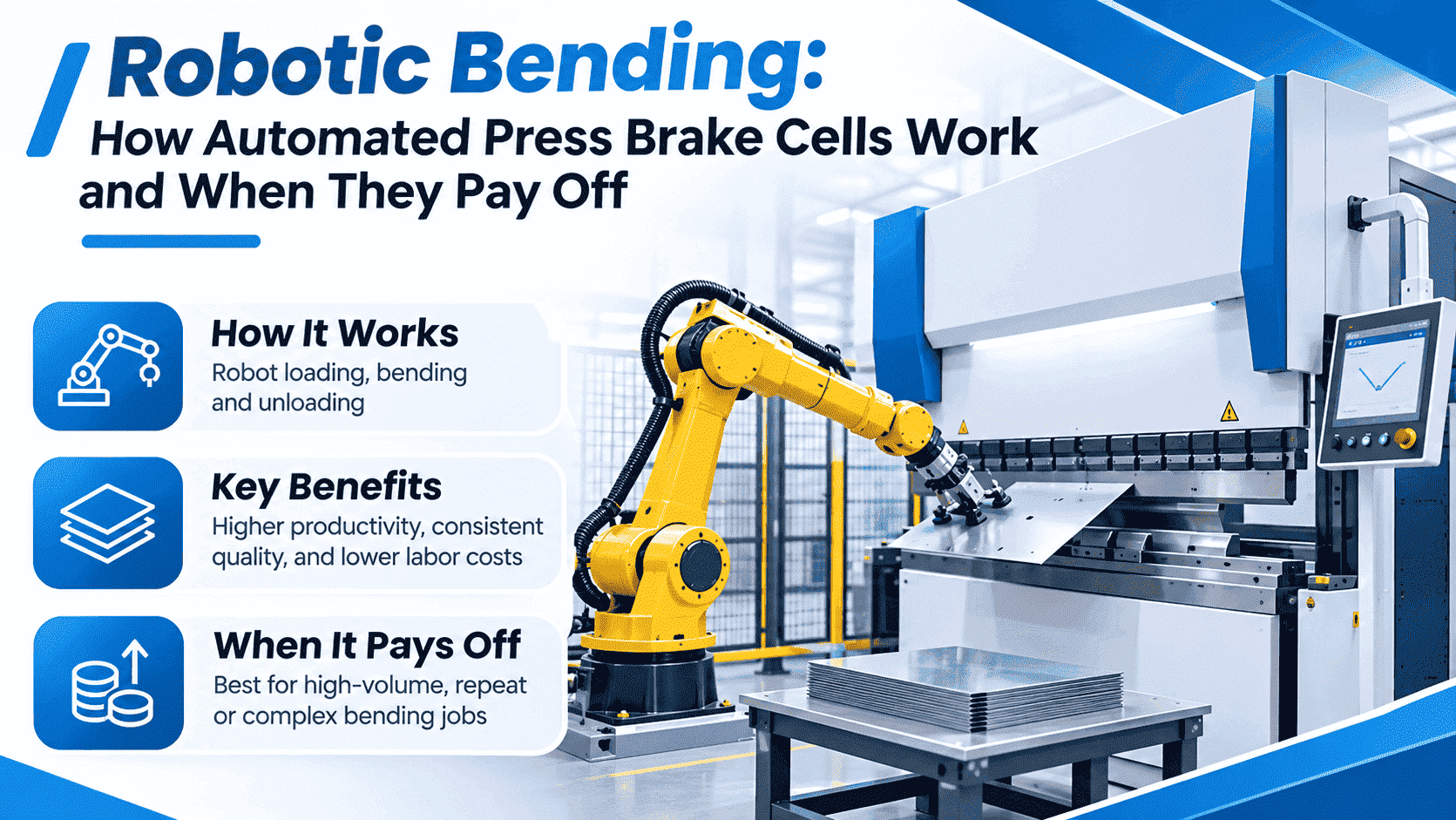
- Automation: Robotic loading, sorting and bending cells reduce labor cost per part.
- Fiber lasers: Higher power and better efficiency keep expanding what lasers can cut.
- Smart CNC controls: Offline programming and bend simulation reduce trial runs.
- Laser welding: Compact welders bring clean joints to small and mid-size shops.
- Data tracking: Production software follows every job from quote to delivery.
- Energy efficiency: Shops choose servo-driven and hybrid machines to lower power use.
How to Choose a Metal Fabrication Partner or Equipment Supplier
Ask these questions before you commit:
- Does the shop or supplier handle your material and thickness range?
- Which machine brands and CNC controllers do they use?
- How do they inspect parts and document quality?
- What lead times do they quote for prototypes and for production runs?
- Can they scale from ten parts to ten thousand?
- Do they offer training, spare parts and after-sales support?
If you plan to build your own shop, match machine capacity to your real product mix. Do not buy the biggest machine on the market. Instead, list your most common material, thickness and part size, then choose equipment that covers about 80 percent of your work comfortably.
Frequently Asked Questions About Metal Fabrication
What is metal fabrication in simple terms?
Metal fabrication is the process of building metal parts and structures from raw metal. Workers cut the metal, bend it into shape, join the pieces by welding or fastening, and then finish the surface. The result can be a small bracket or a large steel frame.
What are the main metal fabrication processes?
The main processes are cutting, forming (bending, rolling and stamping), joining (welding, riveting and bolting), and finishing (coating, plating and polishing). Most projects combine at least three of these four steps.
What is the difference between metal fabrication and machining?
Fabrication shapes metal by cutting, bending and joining, usually from sheet, plate or tube. Machining removes material from a solid block with tools such as mills and lathes. Fabrication suits large or thin parts, while machining suits precise solid components.
Which metals do fabricators use most often?
Fabricators use carbon steel, stainless steel and aluminum most often. They also work with galvanized steel, copper and brass. Carbon steel offers the lowest cost, stainless steel resists corrosion, and aluminum reduces weight.
How thick can a fiber laser cut?
Thickness depends on laser power, material and assist gas. Common industrial fiber lasers cut thin sheet through medium plate in carbon steel, and higher-power machines cut thicker. Check the machine specification for your exact material before you buy.
How much does metal fabrication cost?
Cost depends on material, thickness, complexity, tolerances, quantity and finish. Simple laser-cut and bent parts cost far less than welded, coated assemblies. Request quotes with drawings, quantities and material grades for accurate pricing.
How can I lower my metal fabrication costs?
Simplify the design, use standard sheet sizes and thicknesses, relax tolerances where possible, and order in batches. Nesting parts efficiently and keeping bend radii consistent also reduce both material waste and machine time.
What equipment does a sheet metal fabrication shop need?
A typical shop needs a cutting machine (usually a fiber laser or shear), a CNC press brake for bending, welding equipment, and finishing tools. Many shops also add a punching machine, a material handling system and inspection tools.
How long does a metal fabrication project take?
Prototypes can take a few days, while production orders often take two to six weeks. Lead time depends on design readiness, material availability, finishing steps and the shop’s current workload.
Conclusion
Metal fabrication rewards careful planning. Start with a manufacturable design, pick the right cutting method, bend with accurate CNC control, join with the most suitable process, and finish the surface to match the product’s job. Each good decision at an early stage lowers cost and improves quality at every later stage.
Xinli Machinery builds bending, shearing and laser equipment for fabricators around the world. Share your material, thickness and production volume with our team, and we will help you build the right machine lineup for your shop.